
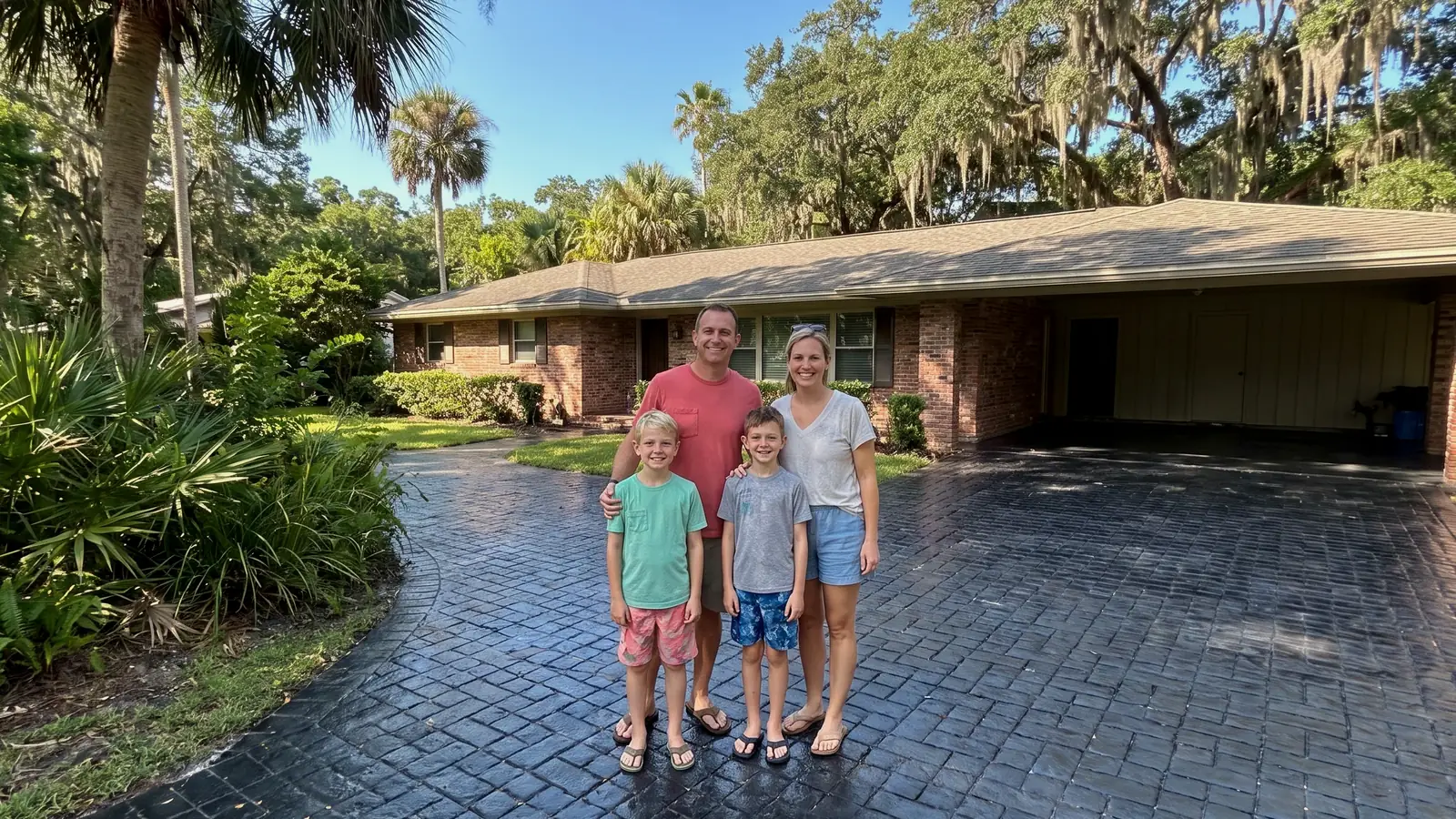
Paver sealing for Seminole Heights homes
Paver Sealing in Seminole Heights, FL
Green joints on a Seminole Heights bungalow walk get a free paver sealing estimate when you call (656) 254-3514.
- Brings out deeper paver color
- Fresh joint sand helps lock pavers in place
- Gives weeds less room to grow
- Makes the surface easier to keep clean
- Free estimate, no obligation
Request a Free Estimate
Free, no obligation.
Fast, careful paver sealing in Seminole Heights
Paver sealing is available in Seminole Heights, from the bungalow blocks near Florida Avenue to the streets by the Hillsborough River. A local contractor cleans, re-sands and seals front walks, driveways and back patios, and the estimate is free. Expect a reply in 1 business day at most, and usually much sooner than that. To start, send a free estimate request.
Maybe the front walk to your porch has gone green in the joints, and the driveway strip beside the house looks tired next to the fresh paint. A careful wash, new sand and a clear coat bring the color back to match the house. Prefer to talk first? Call (656) 254-3514 and describe the walk, the steps and the drive.
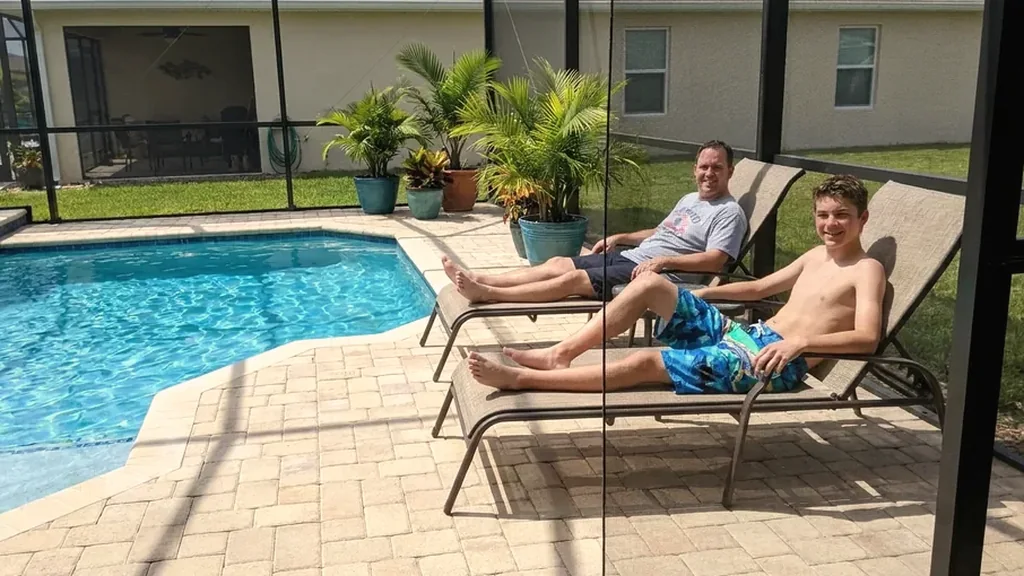
Why hire a local paver sealing contractor in Seminole Heights?
A Seminole Heights bungalow sits on a small lot full of character, so the pavers around it call for a gentle hand. A contractor who knows these yards can work in the tight spaces. To hear how that plays out at your address, call (656) 254-3514.
Walk-through, no charge
A contractor looks at your front walk, drive and patio for free and names a price. Saying no carries no charge.
A range for small jobs
Companies around the bay list $1.25 to $2.50 a square foot. Small bungalow jobs fit well inside it.
Quiet beside the porch
Matte keeps pavers calm next to Craftsman trim and porch rails. A wet look adds shine but shows scuffs sooner.
Careful with old yards
Ask how rinse water is kept off porch steps, wood siding and garden beds. Small lots reward patience.
Get Your Free Estimate in Seminole Heights
Tell us about your pavers in Seminole Heights.
Free, no obligation
What paver problems show up most in Seminole Heights?
Green walkways under old shade trees
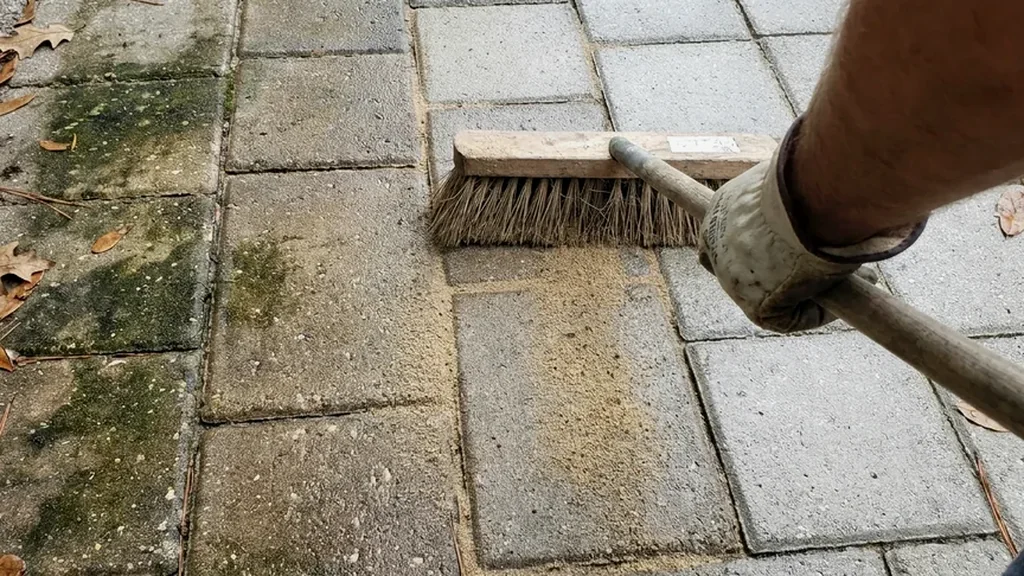
Seminole Heights was built from 1912 on, and the lots have had time to grow shade. Moss and algae on pavers are mostly a heavy-shade problem, according to a landscape trade guide. A front walk under a big oak fits that description. It needs a full wash before any sealer goes on, and treatments do little where the pavers never dry. Many owners see this on the shady side of a porch first, where a damp walk can stay green for months. Catching it early keeps the wash simple. A full wash is the only real fix, and sealing comes after. A front walk under an oak can stay shaded from morning until dusk. In a neighborhood of porches and old trees, that is common. Checking the walk after a rain shows how long it takes to dry.
Narrow driveways that take every tire
Early bungalow lots were laid out for houses oriented east to west, with short and narrow drives. Cars cross the same two strips daily, so those strips dull first. Tire marks and oil drips show up on lighter pavers fast. A wet look shows those scuffs sooner than matte, so the finish deserves thought. A drive that old can also hold years of oil and brake dust, which a wash has to deal with before sealing. Ask how the contractor handles spots like that. Short drives beside a bungalow often run along the property line. Tires drift over the edge and break down the paver there first. Edge pavers sometimes need resetting before any sealer is applied.
Sand that leaves the joints
Myakka, the state soil of Florida, is sand from top to bottom, and rain moves down through it fast. With storms from late May through early October, joint sand washes out of paver walks that sit near downspouts and low corners. Empty joints let weeds and ants in. Sand goes back in every time before sealing. Sinking is another sign. If a paver near a downspout sits lower than its neighbors, mention it, because a dip needs repair before the coat. Many bungalow yards have downspouts that empty onto a walk. That sends a stream of water across the joints every storm. Sand ends up in a fan on the downhill side, which is the sign to look for.
Old sealer from an earlier owner
Many bungalows here have changed hands more than once since the 1920s. A previous owner may have sealed the walk with a product nobody recorded. A water-based coat will not work over a solvent-based one. The contractor has to work out what is on the surface before choosing the next coat. A patchy, flaking surface is a clue that something was applied years ago. A short test on one paver can help sort out what is there. After a hundred years of owners, a walk can carry layers of unknown product. A patchy shine or a flaky film is a clue. The contractor works from the surface, not from guesswork.
Rust from sprinklers and old spigots
University of Florida extension says most Florida well water is high in iron and that orange streaks show where it is used for irrigation. In an older yard with an irrigation system running off a well, look at the pavers nearest the sprinkler heads. Rust has to be treated before sealing. Sealer would lock the stain in. Moving the spray heads away from the walk keeps new marks from forming after the job is done. Old irrigation lines in older yards can leak or mist. If you see orange on pavers near a spigot, that is worth mentioning. Rust treatments are done before any coat.
Does paver sealing work differently in Old Seminole Heights?
It can, because the oldest blocks are the most tightly built. The national district was built from 1912 to 1928 with 325 contributing buildings, mostly bungalow and Craftsman homes. Walkways here are short, porches sit close to the street, and yards are small. When you send a free estimate request, mention your street and what the walk is made of.
Hampton Terrace is a separate historic district in the same part of town, and the Seminole Heights district carries both local and national status. Tampa's Architectural Review Commission designated the local district in 1995. That commission reviews exterior changes, so a quick call to the city before you change a front walk is smart. Call (656) 254-3514 and ask the contractor what to check first.
Farther along are the streets near Rivercrest and Epps parks, which open onto the Hillsborough River. Lots there can be damper and shadier than a block near Florida Avenue. Greener pavers tend to show up near the water and under big oaks. Tell the contractor where you live and send a free estimate request for a free look.
What does paver sealing cost in Seminole Heights?
Companies in this region list $1.25 to $2.50 a square foot for washing, sanding and sealing. Seminole Heights jobs are often small, a front walk, a short drive and a back patio, so the total can be modest even at the same rate. Green growth, old sealer and rust move the price within that range. To get a figure for your property, send a free estimate request.
Access shapes the cost too. A narrow side yard that has to be carried through by hand takes longer than an open drive. A stained walk under heavy shade may need extra washing. Call (656) 254-3514 to learn which of these fit your yard, with no obligation.
| Paved area | Typical example | Clean, sand and seal |
|---|---|---|
| 300 sq ft | Small patio or walkway | $375 to $750 |
| 600 sq ft | Two car driveway | $750 to $1,500 |
| 1,000 sq ft | Large driveway or pool deck | $1,250 to $2,500 |
| 1,500 sq ft | Driveway plus pool deck | $1,875 to $3,750 |
Math based on the $1.25 to $2.50 per square foot that Tampa Bay paver companies publish. Your contractor sets the actual price after seeing the surface. Repairs, leveling and stripping failed sealer are usually extra.
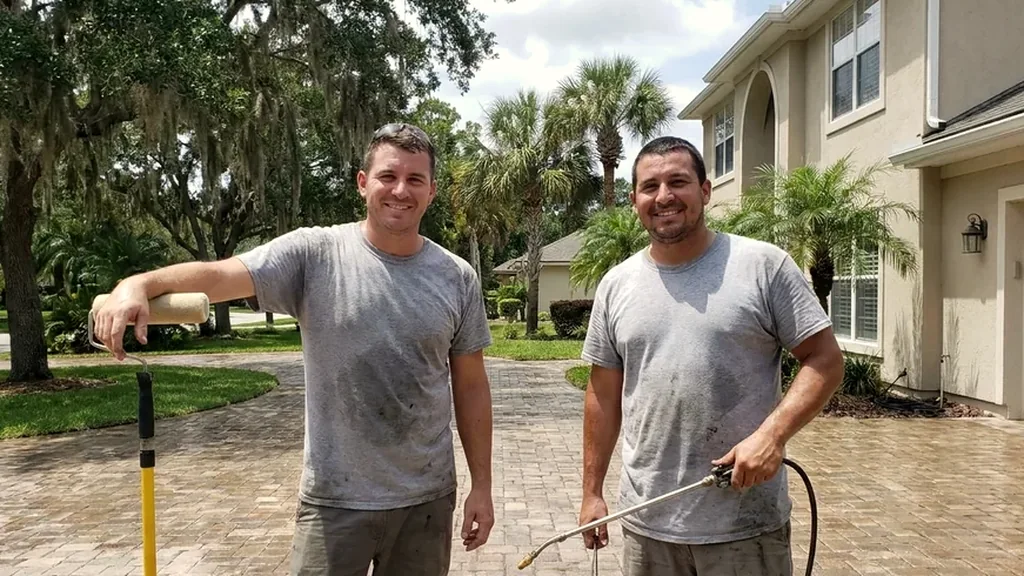
How does a paver sealing job work in Seminole Heights?
Look at the walk, drive and patio
The contractor checks each surface for low spots, loose pavers and old sealer. Sunken pavers get fixed before sealing, because a coat of sealer preserves any dip it covers. In an older yard the contractor also looks at where water runs. Point out any spot near the porch that worries you. In an old neighborhood, ask for the visit to include the front steps, since they often share a surface with the walk. Ask the contractor to check the steps up to the porch, since they often hold the most dirt.
Wash without splashing the house
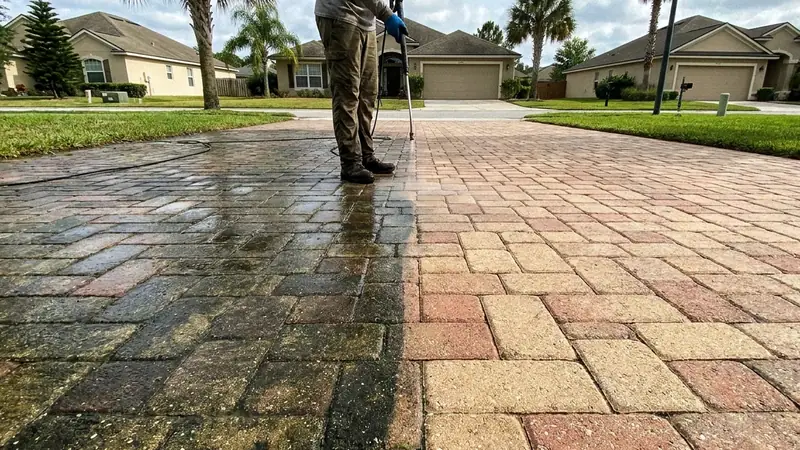
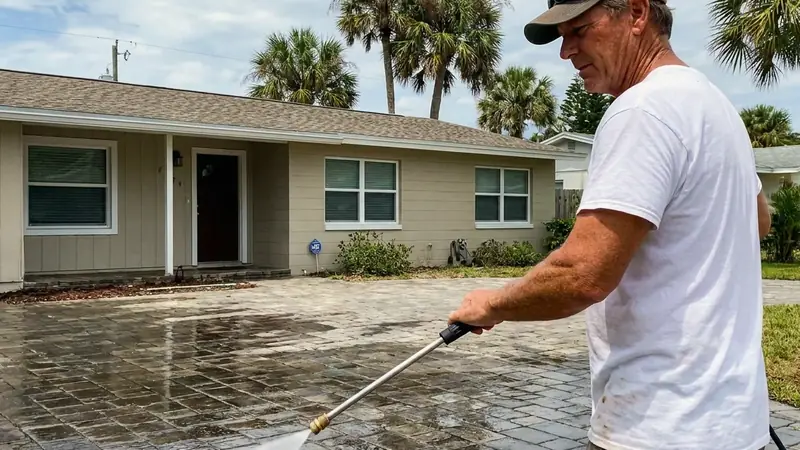
Washing lifts the green film and tire marks. On a small bungalow lot the contractor keeps rinse water off wood siding, porch steps and garden beds. Rust gets its own treatment here, since sealer would trap it. Slow, careful work pays off in an older yard. A clean, bare surface is what the sealer needs. Dirt that stays on the surface ends up trapped beneath the coat. Rinse water is kept off wood siding and porch skirts. The contractor uses a gentle pattern near plantings and old brick.
Fill the joints with fresh sand
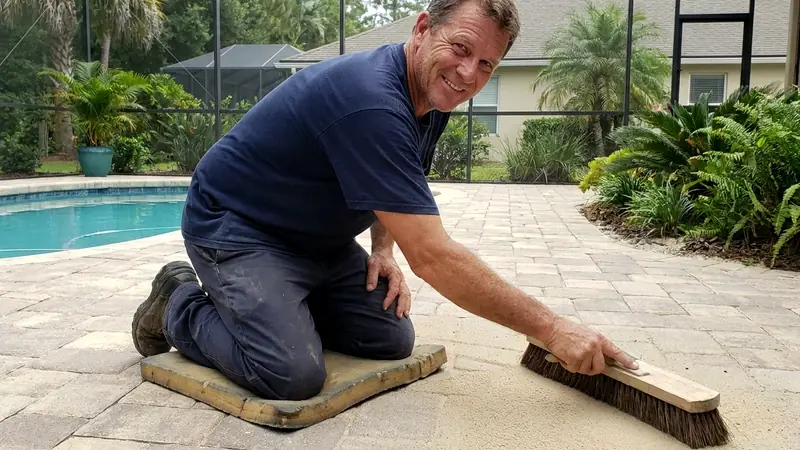
Joint sand rinses out with the dirt, so new sand goes in before the sealer. Because Florida's sandy soil drains fast, joints near downspouts empty often. They are filled and swept clean. Full joints help the pavers hold together and keep weeds out. Kiln-dried sand is a common choice, and the contractor can say what goes into your joints. Ask for sand that matches the color of your joints. Sand is swept in slowly so tight joints between older pavers fill evenly. Loose grains are cleared from the steps.
Wait for a dry surface
Storms run in the afternoon from late May through early October, and a shaded strip beside a garage dries more slowly. A careful contractor waits instead of sealing damp. A short delay beats a coat that turns cloudy. Dew, sprinklers and low spots hold moisture longer than they look, so the joints get checked as well as the tops. That patience is part of what keeps a coat clear and even. Shaded walks can need a longer wait. The contractor tests the joints by hand and may begin on the sunniest section first.
Seal and share the stay-off time
Sealer is applied in the sheen you picked. Quotes commonly leave two to five years before the next coat. Foot traffic usually returns before cars, and you get a clear time to keep both off the pavers. Jot down the product name so the next owner or contractor has it. Water that beads afterward tells you the coat is working. Water that soaks in and darkens the paver means it is wearing thin. On a small lot, parking can be tight. Ask for the stay-off time early so you can plan where the car goes.
Complete paver services in Seminole Heights
At a Seminole Heights bungalow the work goes front to back. The front walk and steps come first, then the drive strip, then the patio. Each is washed, re-sanded, dried and sealed in turn. To ask how long each stage takes at your address, call (656) 254-3514.
Porch landings and front walks see the most feet, so they show wear first. Driveway strips take tires and oil, and back patios take chairs and shade. Tell the contractor which areas matter most when you send a free estimate request.
A sealer choice starts with what is on the pavers now, since water-based will not go over solvent-based. Then you pick the sheen. On a Craftsman bungalow, matte tends to sit quietly beside the porch. Call (656) 254-3514 to talk through options for your house.
Weather plays a role. Storms come most afternoons from late May through early October, so a summer date can slip. Many Tampa Bay companies like October through early spring. For a date that fits your week, send a free estimate request.
Questions to ask before you hire
- Can you match a sealer to the pool deck so it stays safe for bare feet when wet?
- Can my HOA see the sealer name and finish before you start?
- Does the quote include the pressure wash, new joint sand and any sunken pavers I point out?
- Will the sealer change the color of my pavers, and can I see a sample patch first?
- How do you protect my landscaping and the grass edges from the sealer and the wash water?
- What happens if an afternoon thunderstorm rolls in right after you seal?
- Is the work covered in writing if the sealer peels or turns cloudy?
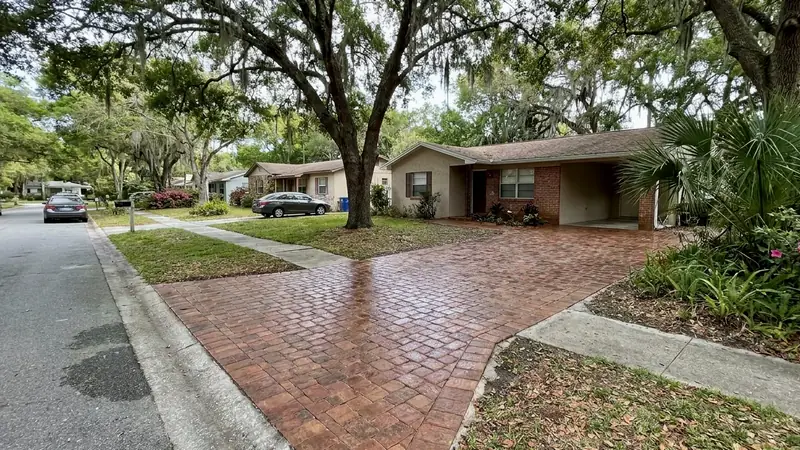
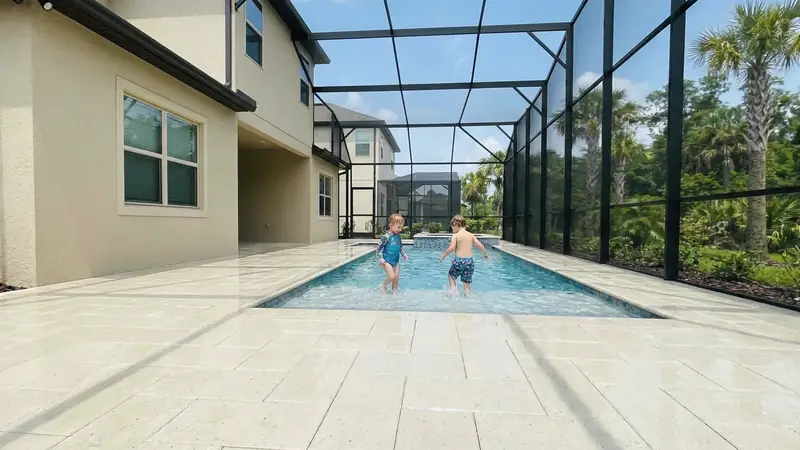
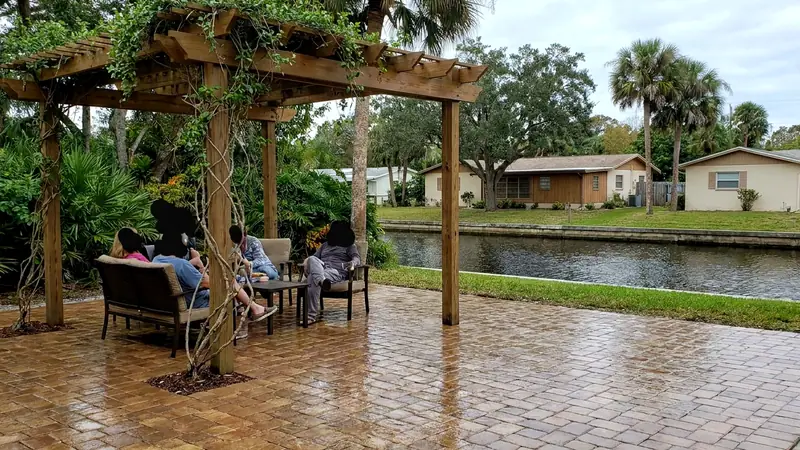
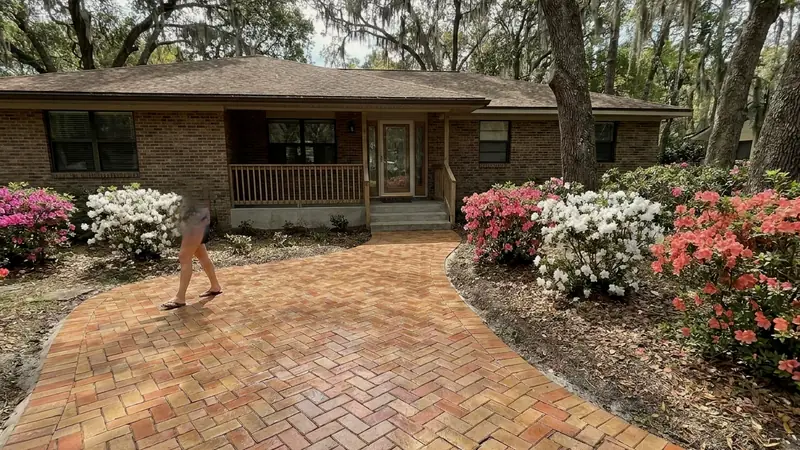
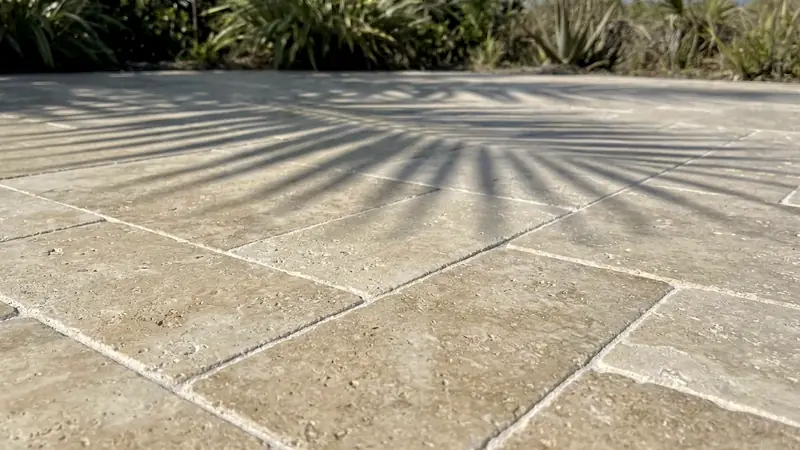
What do sealed pavers look like around Seminole Heights?
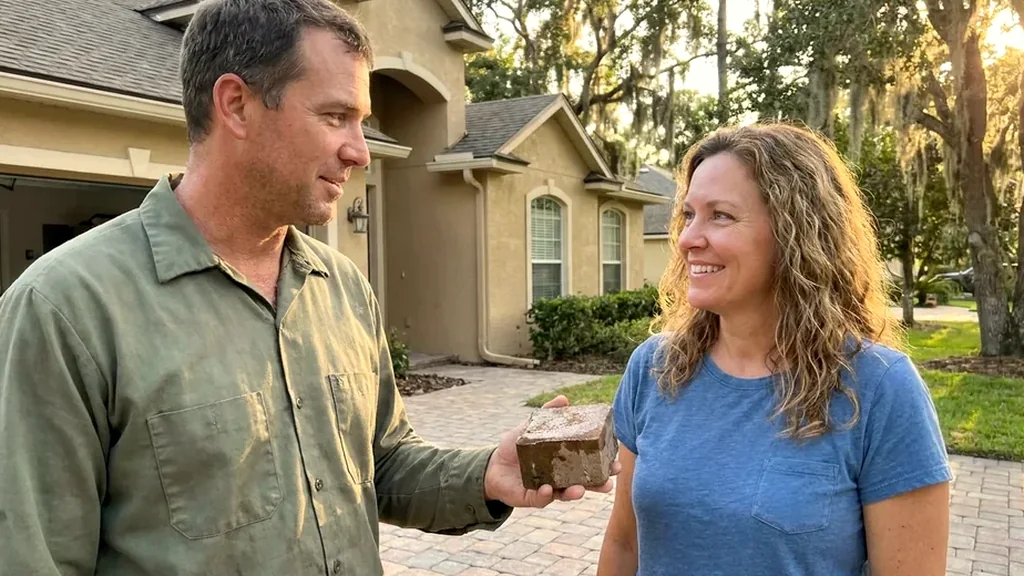
Why local matters in Seminole Heights
A contractor who works Seminole Heights knows the houses are old and the yards are small. Rinse water, tools and sealer all need more care than on a wide suburban lot. Someone who works only in new subdivisions might not think of that. To reach a local contractor, call (656) 254-3514.
Local knowledge covers the rules as well. Part of the neighborhood is a local historic district, and the Architectural Review Commission reviews exterior changes there. A contractor used to the area will tell you to check before you change a front walk. Use send a free estimate request and mention whether your street is in the district.
Local work also respects the neighbors. Blocks here sit close together, and spray can drift onto the next porch. A contractor who knows these blocks plans for it. If that sounds like the care you want, send a free estimate request and describe your lot.
How did Seminole Heights get its bungalow streets?
They came from a streetcar suburb. In 1911 a developer named Young laid out 40 acres about three miles north of downtown, and the trolley made living there and working elsewhere possible. The first houses were mostly bungalows facing east to west. If you live on one of those early blocks, call (656) 254-3514.
Suwanee Heights followed by 1912 with the same east-west rule. Later, during the Florida boom years from about 1919 to 1929, more building spread north and east. Today the Hillsborough River parks, Rivercrest and Epps, sit at the neighborhood edge. Wherever your bungalow stands, send a free estimate request and describe the walk.
Frequently Asked Questions
What does an average paver sealing job cost in Seminole Heights?
The published range around Tampa Bay for wash, sand and seal is $1.25 to $2.50 a square foot. Many Seminole Heights jobs are small, so the total can stay modest. A free estimate gives you the number for your own walk and drive. You owe nothing for the visit, and the price spells out what it covers. Many Seminole Heights owners have more than one small paver area to do.
What is the average price for paver sealing in Florida?
Companies around the bay commonly list $1.25 to $2.50 for each square foot. Green growth, old sealer and empty joints move a job inside that range. Ask for the total square feet in your quote. A free estimate turns the range into a price for your own yard. A front walk is often the first thing neighbors see, so the finish matters.
How much does it cost to seal pavers per square foot?
The range commonly published around Tampa Bay is $1.25 to $2.50 a square foot for cleaning, sanding and sealing. Larger jobs and simple access can land lower in the range. A free look at your yard gives a firm figure. Many Seminole Heights yards are small, which keeps the total manageable. An older yard may have tree roots that lift pavers, which need attention before sealing.
What should I worry about before sealing my pavers?
Upkeep is the trade-off: coats wear and come due again, and a wet look shows scuffs sooner than matte. It also needs dry pavers, so a shaded Seminole Heights yard may wait longer. The quote should list each area, such as the walk, the steps and the drive.
Is paver sealing a good investment in Florida?
For most homes, yes. The coat keeps joint sand in place and gives weeds and ants less to work with. A coat cannot lift a sunken paver, so resetting comes before sealing. A new coat is needed every few years, so plan for that cost too. If a historic review applies to your address, ask the city before you change the surface.
What should I clean pavers with before sealing?
A contractor washes them with equipment and cleaners chosen for your pavers, then replaces the joint sand. Near an older house the rinse water is kept off siding and steps. Ask which cleaner is planned for your pavers and what happens with stains. A clean start helps the finish dry evenly. Brick-colored pavers can look richer with a wet look, while gray ones stay calm in matte.
Is a sprayer or a roller used for sealing pavers?
Spraying and then rolling is common, since the roller works the sealer into the joints. Your contractor can explain why a method fits your sealer and your pavers. Rolling presses the sealer into the joints, which helps it hold. Keep pets off until the contractor says it is safe.
Do I need city approval to seal pavers in Seminole Heights?
It depends on your address. Part of the neighborhood is a local historic district, designated by Tampa's Architectural Review Commission, and that commission reviews exterior changes. The sources read do not name sealing, so check with the city if you are in the district. A short call can save you trouble later. A quick photo of the old sealer's label helps match the next coat.
Can a Seminole Heights walkway be sealed in summer?
It can, though the date may shift. Storms run most afternoons from late May through early October, and sealer needs dry pavers. Many local companies like October through early spring for sealing work. A short wait often means a better result and a clearer coat. Small lots can be finished in a single day, depending on drying.
How long before I can walk on sealed pavers?
Foot traffic usually returns sooner than cars, but the time depends on the sealer and the weather. Settle on a day and time with the contractor beforehand. Chairs, grills and cars stay off the pavers until the contractor says they can return. If you plan to repaint the porch, do that before the walk is sealed to avoid drips.
Can sealing fix loose or sunken pavers on my walk?
No. Sunken or loose pavers need to be reset before any sealer goes on, because sealing over a dip only preserves it. Point out the low spots at the first visit so the estimate includes them.
Will sealer change the color of my Seminole Heights pavers?
It can. A wet look deepens the color and adds shine, and matte keeps the natural tone. A small test spot lets you judge the sheen before the whole walk is done.
Ready for a Free Estimate in Seminole Heights?
Call (656) 254-3514 and tell us about your pavers.
Free, no obligation